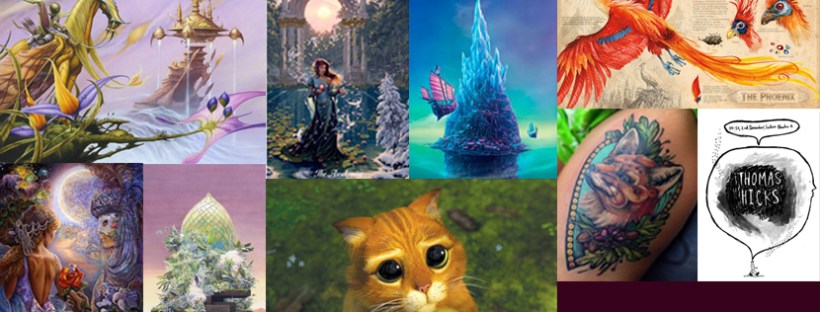
I participated in a collaborative research assignment which aimed to investigate the mechanisms that are crucial to creative professionals in sustaining a successful business profile. This involved each collaborator contacting various artists of their personal choosing, to interview them to discover their personal knowledge on subjects such as how they find work, their artistic process, advice for aspiring artists, and more…
The general chosen title of our project was ‘The Diversity of Freelance Work.’ The individual investigation I carried out for my part saw more the insights into the success of artist professionals and how they sustain it through their day to day lives.
After I had managed to converse with six different artists, one of my teammates three, another speaking to one, and the last member with no luck at all, we shifted the focus of our assignment down to three of the artists and divided the attention equally between us on four themes.
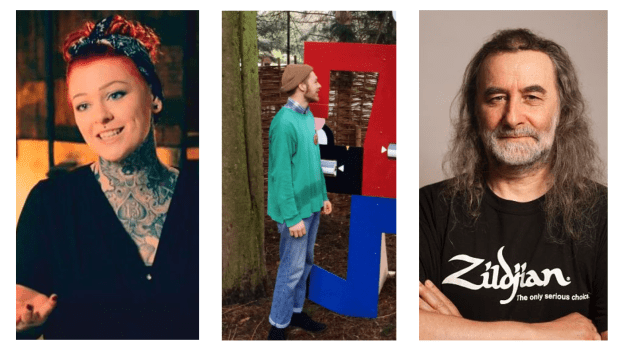
These three creative professionals are shown below and they were tattoo artist Lou Hopper (left), illustrator Ollie Silvester (middle), and fantasy illustrator Rodney Matthews (right) – who I had interviewed.
For the purposes of this assignment which resulted in a group presentation, my focus area to discuss was the theme of ‘a typical working day’. When investigating this theme from our findings from these interviews there were clear similarities between the different disciplines in terms of what the artists were preaching and tales of their professional conduct.
From the three artists we focused on, as well as the other five that I had personally interviewed, it was very intriguing to find a recurring pattern emerging in what the artists were all saying in terms of how they work to create successful business for themselves.
What exactly do these successful artists do?
1. Get up early and have a decent breakfast
The first thing that nearly every creative individual states is that they wake up early and have breakfast. Getting up early shows dedication to completing their ongoing projects and a positive attitude. The fact that they mention breakfast and barely touch on the other meals of the day indicates how significant it is to have a decent breakfast in the morning to set you up for a day of hard working, especially if you wake up early. Further to this Ollie Silvester stated, “It’s important to get your brain working.”

Better start having breakfast more often then!
2. Spend 8-12 hours on their artwork every day
Then in their own words every single professional expresses that they work on their respective art fields for the majority of the day, averaging 8-12 hours in their home studios or other workplace. This is a clear suggestion of a strong, positive, dedicated work ethic. Some comment that they work all through the day until an artwork is finished. This commitment of time is a reflection of what it takes to complete professional work in the creative industry, as the artists’ mention keeping an eye on deadlines and such. So you need to be willing to put in a lot of hard work and hours into your efforts to be working as an illustrator, even in the various disciplines.
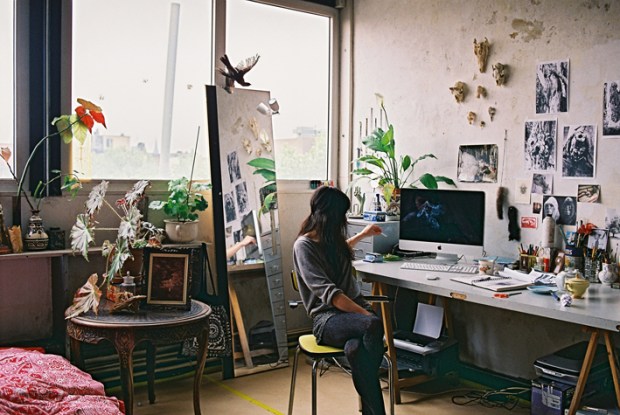
Get in that studio and draw draw draw!
3. Stay organised and on top of administrative affairs
There is also frequent mention of checking diaries and emails for any other things that require taking care of before diving into art making. These could be matters concerning tax considerations, appointments, or any other admin related things. This implies that it is important to take care of the business side of your practice and check what needs to be done every day, to help your working practice run smoothly and fruitfully.

Plan your time in a diary!
4. Take frequent short breaks
Referenced occasionally is the use of taking short breaks. Even just to have a hot drink, a quick trip to the shop, or a stretch, it is important in order to keep you going and refresh your eyes – and so you don’t do your back in!

Grab a coffee every so often!
5. Welcome self-indulgence in the evenings
The final overarching similarity I found is the artists expressed that they like to indulge in separate activities in the evenings if they have time. This stresses the notion that you should aim to get a piece of work or deadline finished before you take the rest of the day off, which relates back to the strong work ethic point. Often these self-indulgent activities involve calming tones such as John Avon’s hobby of listening to audio books, or Rodney Matthews’ treat of a glass of wine whilst slumped in a chair. Many of the artists indulge in playing instruments and making their own music. Such activities are a positive impact to your mental state as well as means of rewarding yourself for a hard working day, which introduces positive reinforcement into your practice, and therefore another technique to keep yourself going, as working away at an artwork for several hours every day is surely tedious and requires self reward.

Have a little me-time!
6. Are well prepared and very flexible
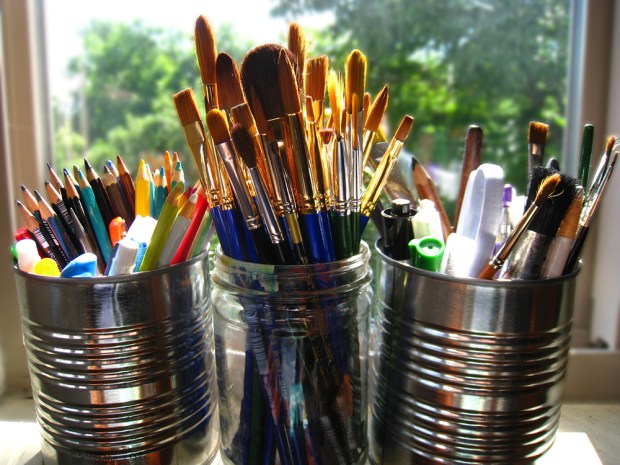
Yet there are a couple of creative individuals who expressed that every day is different because they are dictated by the clients’ requests or the varying types of projects coming and going unpredictably. This is an extra point to bare in mind for future work on commissions and other pieces in any kind of creative discipline as there is so much diversity of what you can do in the creative industry, you need to be prepared for interpreting and meeting a wide variety of deadlines, sizing and scales, artistic mediums, project themes, level of exposure to the world, client briefs, and many more aspects I am sure. There is an essence of striving to better yourself in these artists’ practice and the reason for their continuously intense, focused, positive, flexible work ethic is probably best explained through John Avon’s statement, “us artists are literally as good as our last jobs”.
Stay open-minded about the work you create!
As I found all of the artists’ wise words throughout their interviews so useful and insightful, for the purposes of our group presentation I created a hand-out of quotes, one from each artist we spoke to, that I felt would either prove useful or insightful for the audience and anyone hoping to break into the creative industry in any way, shape or form. These artist key quotes are listed below.
“The days are dictated by the clients and their requests”
– Lou Hopper“You are in control, and your image as an illustrator is very important”
– Ollie Silvester“After almost 40 years as a painter I can say with some confidence that the only thing that improves one’s painting technique is even more painting”
– Jonathon Earl Bowser“In the beginning I put in many hours of unpaid work, because I was obsessed with creating unusual imagery”
– Rodney Matthews“The funny thing is, if I did ever get a day off, I’d just want to draw!”
– Jim Kay“My other breakthrough was finding a good agent who were able to promote my work worldwide”
– Josephine Wall“We all need to escape. Some do it by sport, some by travel, some by talking, some by art/music/writing and film”
– John Avon“Remove half the pieces that you want to put in your portfolio. When you’ve done that, remove half again. That’s true for any portfolio”
– Jeff Bedrick“You just have to practice and rely on your friends for constructive feedback”
– Tristram Lansdowne
Overall through our collaborative research project we found that it’s important to consider different disciplines of freelance to match your own passions.
I individually have learned and interpreted that the significant aspects and mechanisms that contribute to a successful working process and business profile as described by these creative professionals we engaged with collectively are: starting the day well, being consistent in hard work, utilise your inspirations, be confident, remember that your image is important, make yourself known, you are in control, and ultimately it’s up to you.
Having learned of these artists’ steps to success and sustaining that success, I very much intend to utilise these skills and tips and incorporate them into my own working practice. I am not suggesting that there is one over-arching perfect formula to be a successful artist, but seeing as in my mind I will hold the confidence that my inspirations are employing such conduct to fuel their successful working lives, it must, after all, breed success.
The Interviews
To see the individual interviews that I personally conducted and to read the insights for yourself please click these links:
An Interview with artist: Jonathon Earl Bowser
An Interview with Visual Effects Artist: Jeff Bedrick
An Interview with fantasy illustrator: John Avon
An Interview with Fantasy Art Legend: Rodney Matthews
An Interview with Fantasy Painter: Josephine Wall
An Interview with Artist: Tristram Lansdowne
 Blog
Blog 